Ant Pest Control for Recurring Indoor Infestations
Recurring ant infestations indoors are a persistent and frustrating issue in both residential and commercial properties. Unlike occasional sightings, repeated ant activity usually indicates an established colony nearby or within the building structure itself.
Ants are highly organised insects that follow pheromone trails, meaning once a viable food or water source is identified, they will continue returning unless the root cause is eliminated. This makes surface-level treatment ineffective in the long term.
Understanding why ants return and how to properly eliminate their nesting sources is essential for effective pest control.
Common Types of Indoor Ant Infestations
Black Garden Ants
Black garden ants are the most frequently encountered indoor species in residential properties. Although they typically establish nests outdoors in soil, lawns, or beneath paving slabs, they regularly enter buildings in search of accessible food sources.
They are particularly attracted to:
- Sugary substances such as syrups, fruit juices, and confectionery residues
- Crumbs and food particles on kitchen surfaces
- Greasy residues around cooking appliances
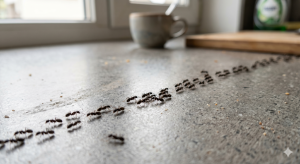
Once a food source is identified, worker ants establish pheromone trails that allow rapid recruitment of additional colony members, resulting in visible infestation trails along skirting boards, countertops, and entry points.
While outdoor nesting means infestations are often seasonal, colonies located close to foundations can lead to repeated indoor incursions.
Pharaoh Ants
Pharaoh ants are one of the most problematic indoor pest species due to their unique colony structure and behaviour. Unlike many ant species, they prefer warm indoor environments and rarely nest outdoors in temperate climates.
Key characteristics include:
- Formation of multiple interconnected satellite colonies
- Continuous splitting of colonies when disturbed (budding behaviour)
- Preference for concealed nesting sites such as wall voids, electrical outlets, and behind appliances
- Attraction to high-protein and sugary food sources
Their ability to relocate rapidly when threatened makes them extremely difficult to eliminate using conventional sprays. Inappropriate treatment often causes colony fragmentation, leading to a wider infestation spread throughout the property.
Argentine Ants
Argentine ants are a highly invasive species known for forming massive supercolonies that can extend across large geographical areas. This interconnected colony structure allows them to persist and expand without traditional territorial competition.
Their behaviour includes:
- Persistent foraging patterns with strong site fidelity
- Rapid recruitment of large numbers of workers to food sources
- High adaptability to indoor environments, particularly kitchens and utility areas
- Resistance to environmental disruption due to colony redundancy
Once established in or near a property, Argentine ants often return repeatedly to the same indoor locations, even after repeated cleaning or partial treatment, due to their large external population base.
Why Ant Infestations Keep Recurring Indoors
Recurring ant activity is rarely random and typically indicates unresolved environmental or structural conditions supporting ongoing colonisation.
Primary Contributing Factors
- Nearby external colonies close to foundations allowing continuous indoor foraging
- Readily available food residues, particularly sugar, grease, and protein-based waste
- Moisture-rich environments in kitchens, bathrooms, and utility rooms supporting survival and nesting
- Incomplete or incorrect baiting strategies, leading to partial colony survival
- Persistent pheromone trails, which continue guiding ants back to previously successful routes
Ants rely heavily on chemical communication. Even after visible cleaning, microscopic pheromone residues can remain on surfaces, effectively re-establishing navigation pathways for future foragers.
In many cases, infestations persist because the colony itself has not been eliminated, only temporarily disrupted.
Where Ants Commonly Enter and Nest Indoors
Kitchens and Food Preparation Areas
Kitchens are the primary hotspot for ant infestations due to constant food availability, warmth, and moisture. Even minor food residues around appliances or under worktops can sustain long-term foraging activity.
Common attraction points include:
- Sink areas and dishwashing zones
- Under appliances such as fridges and cookers
- Food storage cupboards and bins
Wall Voids and Structural Gaps
Ants frequently exploit hidden structural spaces to establish nests that are difficult to detect.
Typical nesting locations include:
- Wall cavities and insulation layers
- Beneath flooring and subfloor voids
- Behind skirting boards and plasterwork gaps
These concealed environments provide stable humidity and protection from disturbance, allowing colonies to expand unnoticed.
Bathrooms and Utility Rooms
Moisture is a major attractant for ants, particularly during dry outdoor conditions. Bathrooms and utility areas provide consistent humidity and water access.
They are commonly drawn to:
- Leaking pipework or condensation areas
- Sink and bath surrounds
- Washing machine or boiler installations
External Entry Points
Building perimeters are often the initial access route for infestations.
Common entry pathways include:
- Cracks in external walls or render
- Gaps around windows and doors
- Cable and pipe entry points
- Poorly sealed brickwork or foundations
Without sealing these access points, reinfestation is highly likely even after treatment.
Signs of a Recurring Ant Infestation
Recurring infestations often present predictable behavioural patterns:
- Repeated ant trails in identical locations
- Increased activity near food preparation or water sources
- Rapid reappearance after cleaning or treatment
- Fine soil deposits or debris along skirting boards or wall edges
- Infestation resurgence within days of apparent elimination
Persistent activity is a strong indicator of either a nearby external colony or an established internal nesting site.
Effective Ant Pest Control Methods
Targeted Ant Baiting Systems
Modern pest control relies heavily on baiting strategies rather than surface spraying. Worker ants consume bait and transport it back to the colony, enabling elimination at the source.
This method is particularly effective because it targets:
- Queens responsible for reproduction
- Larvae and developing colony members
- Secondary satellite nests in complex species
Surface Cleaning and Pheromone Disruption
Effective cleaning is essential but must go beyond standard surface wiping. Professional-grade cleaning agents are often required to break down pheromone trails and prevent re-establishment of foraging routes.
Key focus areas include:
- Countertops and food preparation surfaces
- Entry points and skirting edges
- Appliance surrounds and hidden corners
Entry Point Sealing
Physical exclusion is a critical long-term control measure.
This includes:
- Sealing cracks in walls and flooring
- Installing barrier materials around pipework and cables
- Repairing damaged seals around windows and doors
Without exclusion, reinfestation pressure remains constant.
Moisture Control
Reducing humidity levels significantly decreases habitat suitability for ants.
Preventative measures include:
- Repairing leaks and condensation issues
- Improving ventilation in kitchens and bathrooms
- Ensuring dry storage conditions in utility areas
Why DIY Treatments Often Fail
Over-the-counter treatments frequently address only visible ants rather than the colony structure itself.
Common failure outcomes include:
- Temporary suppression followed by rapid return
- Colony relocation rather than elimination
- Fragmentation in species such as Pharaoh ants, leading to multiple new colonies
- Reinforcement of pheromone trails due to incomplete cleaning
Without targeting the reproductive core of the colony, infestations typically reappear within a short period.
Professional Ant Control Approach
A structured professional strategy focuses on long-term eradication rather than surface-level suppression.
This includes:
- Accurate identification of ant species and behaviour patterns
- Locating primary nests and satellite colonies
- Strategic bait placement tailored to species biology
- Monitoring infestation activity over time
- Implementing exclusion and prevention measures
This integrated approach ensures complete colony collapse rather than temporary control.
Prevention Strategies for Long-Term Control
Maintain Strict Food Hygiene
All food residues must be removed immediately to eliminate attractants that sustain foraging behaviour.
Seal Structural Entry Points
Blocking access routes is essential for preventing reinfestation from external colonies.
Regular Inspection of High-Risk Areas
Routine monitoring of kitchens, bathrooms, and utility spaces allows early detection before colonies become established.
Control Outdoor Nest Proximity
Reducing vegetation, organic debris, and nesting opportunities near foundations helps minimise external pressure.
When to Call a Pest Control Professional
Professional ant control is strongly recommended when:
- Ants repeatedly return after treatment
- Multiple trails or entry points are present
- Nesting within structural voids is suspected
- DIY baiting methods have failed to achieve long-term results
Specialist treatment ensures precise targeting of colony structure and prevents repeated reinfestation cycles.
Conclusion
Recurring indoor ant infestations are almost always a symptom of a deeper ecological or structural issue rather than a simple surface contamination problem. Effective long-term control requires a combination of targeted baiting, strict hygiene management, and physical exclusion.
By addressing both behavioural patterns and environmental drivers, complete colony elimination becomes achievable. In persistent or complex infestations, professional pest control remains the most reliable method for ensuring long-term resolution and preventing recurrence.
Expert Tips & Guides to Prevent Pests After Ant Treatment in London
- Flies in Kitchens and Waste Areas (Drain and Hygiene-Related Infestations)
- Ant Pest Control for Recurring Indoor Infestations
- Bed Bug Heat Treatment for Full Eradication in One Visit
- Pest Survey Reports for Mortgage and Property Safety Checks
- Signs of Hidden Pest Infestations Behind Walls and Appliances
- Cockroach and Silverfish Infestations in Kitchens and Bathrooms
- Flea Infestations in Homes Without Pets
- Chemical-Free Treatments for Hidden Infestations