
Flea Infestations in Homes Without Pets
Flea infestations are commonly associated with pets, but they can just as easily occur in homes without animals. This often comes as a surprise to homeowners, especially when bites appear suddenly without any obvious source.
Fleas are highly adaptable parasites capable of surviving in carpets, soft furnishings, and cracks in flooring. They can be introduced through indirect contact, wildlife, or even previous occupancy, remaining dormant for extended periods before becoming active.
Understanding how fleas enter pet-free homes and what conditions allow them to thrive is essential for effective control and long-term prevention.
How Fleas Enter Homes Without Pets
Even without domestic animals, fleas can still be introduced through multiple indirect pathways. In many cases, the source is environmental rather than household pets.
Common introduction routes include:
- Rodents inside or near the property carrying fleas into wall voids and lofts
- Wildlife activity such as foxes, birds, or hedgehogs near foundations or roof spaces
- Previous pet occupancy, leaving behind eggs and larvae in carpets, underlay, and flooring gaps
- Second-hand furniture or carpets, especially upholstered items or mattresses
- Human transfer, where fleas hitchhike on clothing or luggage from infested environments
- Shared building systems, including flats, terraces, or converted properties
Flea eggs are particularly problematic because they are small, adhesive, and often remain hidden deep within fibres or flooring.
Why Fleas Survive and Multiply Indoors
Fleas do not require continuous animal presence to survive in the short term. Once inside a property, they can complete much of their life cycle within the indoor environment.
They thrive in:
- Warm, centrally heated homes
- Carpets, rugs, and soft furnishings
- Cracks between floorboards and skirting boards
- Upholstered furniture and bedding seams
- Dust and organic debris accumulation zones
Even in the absence of pets, fleas will feed on human blood when necessary, particularly when populations increase.
The Flea Life Cycle (Why Infestations Return)
Understanding the flea life cycle is essential for effective treatment.
1. Egg Stage
Flea eggs are laid on a host but quickly fall into carpets, bedding, and flooring cracks. They are nearly invisible and highly resistant to many treatments.
2. Larval Stage
Larvae feed on organic debris and flea faeces (“flea dirt”) found in carpets and hidden areas. They avoid light and burrow deep into fibres.
3. Pupal Stage (Most Resistant Phase)
The pupal stage forms a protective cocoon. In this stage, fleas can remain dormant for weeks or even months, waiting for vibration, heat, or carbon dioxide signals to emerge.
4. Adult Stage
Adults emerge when a suitable host is detected. They immediately begin feeding and reproduction, restarting the cycle.
This delayed emergence is why infestations often appear suddenly, even after cleaning or partial treatment.
Signs of Flea Infestations in Pet-Free Homes
Unexplained Bites (Often First Indicator)
Flea bites typically appear:
- On ankles, lower legs, and feet
- In small clusters or linear patterns
- Intensely itchy and inflamed
Reactions vary between individuals, so some occupants may not react at all.
Visible Jumping Insects
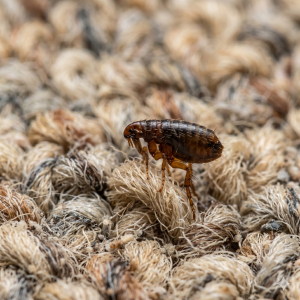
Adult fleas are small, dark, and capable of powerful jumping. They may be seen:
- On carpets and rugs
- Near skirting boards
- Around sofas or bedding
Flea Dirt (Key Diagnostic Sign)
Flea dirt appears as tiny black specks in carpets or fabrics.
A simple test:
- Place specks on damp tissue
- If it turns reddish-brown, it indicates digested blood
Increased Activity in Warm or Static Areas
Fleas are often concentrated where warmth and vibration are present:
- Near radiators and heating vents
- Upholstered seating areas
- Beds and low-traffic carpet zones
Hidden Sources of Flea Infestations
Rodent Activity (Major Hidden Source)
Rodents are one of the most common carriers of fleas in pet-free homes. Mice and rats transport fleas through:
- Wall cavities
- Loft insulation
- Underfloor voids
Even a minor rodent presence can sustain a flea population.
Wildlife Intrusion
Outdoor animals can introduce fleas into homes indirectly:
- Foxes nesting near gardens or sheds
- Birds in roof spaces or eaves
- Hedgehogs under decking or outbuildings
Previous Occupancy Contamination
Fleas can remain dormant long after pets have been removed from a property. Eggs and pupae embedded in carpets may hatch later when conditions improve.
Second-Hand Items
Infested materials commonly include:
- Sofas and upholstered chairs
- Mattresses and bedding
- Rugs and carpets
These items may appear clean but still harbour hidden eggs.
Why Flea Infestations Spread Quickly
Once active, fleas reproduce rapidly under favourable conditions.
Contributing factors include:
- High indoor temperatures
- Abundant hidden breeding sites
- Delayed identification
- Lack of full lifecycle treatment
- Multiple rooms becoming contaminated via movement
Because eggs and pupae are often missed, infestations frequently reappear after initial treatment attempts.
Health and Household Impact
Human Effects
- Persistent itching and skin irritation
- Sleep disruption due to nighttime biting
- Allergic reactions in sensitive individuals
Household Impact
- Rapid spread between rooms via foot traffic
- Contamination of carpets and upholstery
- Psychological stress due to persistent biting activity
While fleas are not typically dangerous in a medical sense, they significantly affect comfort and hygiene.
Effective Treatment Methods
1. Deep Vacuuming (Mechanical Reduction)
Vacuuming helps remove:
- Eggs
- Larvae
- Organic debris supporting larval feeding
Special attention should be given to skirting edges, furniture seams, and under furniture.
2. Professional Insecticide Treatments
Targeted treatments are required to break the full life cycle, especially to address larvae and emerging adults in hidden areas.
These are typically applied to:
- Carpets and rugs
- Upholstered furniture
- Floor edges and cracks
3. Heat and Lifecycle Disruption
Heat is effective against all flea life stages, including eggs and larvae, making it one of the most reliable control methods when professionally applied.
4. Rodent and Wildlife Control
If fleas originate from rodents or wildlife, eliminating the source is essential or reinfestation will continue.
5. Fabric and Environment Cleaning
- Washing bedding and fabrics at high temperatures
- Steam cleaning carpets and upholstery
- Reducing clutter where fleas can hide
Why DIY Treatments Often Fail
DIY flea control often fails because it does not address the full infestation cycle.
Common issues include:
- Killing adult fleas but missing eggs and pupae
- Not treating all affected rooms simultaneously
- Ignoring hidden environmental sources
- Reinfestation from rodents or wildlife
- Lack of repeat treatments timed with hatching cycles
As a result, fleas frequently return within days or weeks.
When to Call a Pest Control Professional
Professional flea control is recommended when:
- Bites continue without pets present
- Fleas are seen repeatedly in multiple rooms
- DIY treatments have failed
- Rodent or wildlife activity is suspected
- Infestation returns after initial treatment
Specialist treatment ensures all lifecycle stages and hidden sources are addressed.
Prevention Strategies for Pet-Free Homes
- Regular vacuuming of carpets and upholstery
- Inspect second-hand furniture before bringing it indoors
- Seal entry points for rodents and wildlife
- Maintain clean, clutter-free flooring areas
- Wash fabrics regularly at high temperatures
- Address moisture or damp issues promptly
Preventing reintroduction is as important as treating existing infestations.
Conclusion
Flea infestations in homes without pets are far more common than many people expect. These pests are highly adaptable and can be introduced through wildlife, rodents, contaminated items, or previous occupancy. Once established, they can survive and multiply within the home environment by exploiting hidden spaces and dormant life stages.
Effective control requires a full lifecycle approach, targeting eggs, larvae, pupae, and adults simultaneously. Without addressing hidden sources and environmental conditions, infestations are likely to return. Professional pest control remains the most reliable method for complete eradication and long-term prevention.
Expert Tips & Guides to Prevent Pests After Treatment in London
- Flies in Kitchens and Waste Areas (Drain and Hygiene-Related Infestations)
- Ant Pest Control for Recurring Indoor Infestations
- Bed Bug Heat Treatment for Full Eradication in One Visit
- Pest Survey Reports for Mortgage and Property Safety Checks
- Signs of Hidden Pest Infestations Behind Walls and Appliances
- Cockroach and Silverfish Infestations in Kitchens and Bathrooms
- Flea Infestations in Homes Without Pets
- Chemical-Free Treatments for Hidden Infestations