
Flies in Kitchens and Waste Areas (Drain and Hygiene-Related Infestations)
Flies in kitchens and waste areas are more than a nuisance; they are a clear indicator of underlying hygiene or drainage issues. These infestations are typically linked to organic waste build-up, moisture retention, and bacterial breeding conditions found in sinks, drains, and refuse storage areas.
Kitchens provide the perfect environment for flies to thrive due to constant food exposure, warmth, and humidity. When combined with poor drainage maintenance or inconsistent cleaning routines, conditions quickly become ideal for rapid infestation growth.
Understanding the root causes is essential for effective control and long-term prevention.
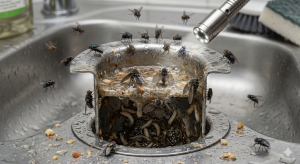
Types of Flies Commonly Found in Kitchens and Waste Areas
Drain Flies
Drain flies breed in organic sludge that accumulates inside sink drains and pipework. They are small, moth-like insects often seen near sinks or bathroom outlets. Their larvae feed on decomposing organic matter within drainage systems.
Fruit Flies
Fruit flies are attracted to fermenting organic material such as overripe fruit, food waste, and sugary residues. They reproduce quickly and are commonly found around countertops, bins, and food preparation areas.
House Flies
House flies are larger and typically enter kitchens from outdoor waste sources. They are strongly associated with contamination risks as they transfer bacteria from waste material onto food surfaces.
Causes of Kitchen and Waste Area Fly Infestations
Fly infestations rarely occur without an underlying cause. The most common contributing factors include:
- Organic waste build-up in sinks, bins, and disposal areas
- Blocked or poorly maintained drains containing decomposing matter
- Infrequent cleaning of kitchen surfaces and hidden corners
- Excess moisture creating ideal breeding conditions
- Improper food storage or exposed food waste
Even minor hygiene lapses can quickly escalate into a full infestation when moisture and organic residue are present.
Where Flies Breed Indoors
Sink Drains and Pipework
Drain systems are one of the most common breeding sites. Organic slime lining pipes provides a continuous food source for larvae.
Waste Bins and Recycling Areas
Unsealed bins containing food scraps or liquid waste create strong attractants for fruit flies and house flies.
Food Preparation Surfaces
Sticky residues, spills, and crumbs left on worktops or appliances encourage fly activity and feeding behaviour.
Hidden Organic Build-Up Zones
Areas behind appliances, under sinks, and around seals often accumulate unnoticed organic matter that supports breeding cycles.
Health Risks and Hygiene Concerns
Fly infestations are not simply a cosmetic issue. They present genuine hygiene and health risks, particularly in food preparation environments.
- Bacterial contamination from waste and drainage sources
- Cross-contamination of food surfaces and utensils
- Increased risk of food spoilage
- Rapid transfer of pathogens between waste and kitchen areas
Because flies frequently move between contaminated and clean surfaces, they act as mechanical carriers of harmful bacteria.
How to Identify a Drain or Hygiene-Related Fly Problem
Early detection is key to preventing escalation. Common signs include:
- Persistent small flies near sinks or drains
- Increased activity around bins or fruit storage
- Swarms appearing after water usage in sinks
- Visible larvae or organic build-up in drainage areas
- Repeated reappearance despite surface cleaning
If flies persist despite general cleaning, the source is likely within drainage or hidden organic deposits.
Effective Treatment Methods
Drain Cleaning and Treatment
Drains should be thoroughly cleaned using biofilm-removing treatments that break down organic sludge. Simply flushing water is not sufficient.
Deep Kitchen Hygiene Cleaning
All surfaces, including under appliances and behind fixtures, should be cleaned to remove hidden food residue.
Waste Management Improvements
Bins should be sealed, emptied regularly, and cleaned to prevent organic build-up and fermentation.
Targeted Pest Control Treatment
In persistent cases, professional intervention may be required to identify and eliminate hidden breeding sites within drainage systems.
Prevention Strategies
Long-term control relies on consistent hygiene and maintenance practices:
- Regular drain flushing and enzymatic cleaning treatments
- Immediate removal of food waste and organic spills
- Use of sealed waste containers
- Daily cleaning of kitchen surfaces and sink areas
- Controlling moisture levels around sinks and pipes
Preventative maintenance is significantly more effective than reactive treatment once infestations are established.
When to Call a Pest Control Professional
Professional support is recommended when:
- Infestations continue despite thorough cleaning
- Flies repeatedly return after short-term control
- Drain sources cannot be visually identified
- Multiple breeding sites are suspected
Specialist pest control services can detect hidden organic build-up and apply targeted treatments to break the breeding cycle.
Conclusion
Flies in kitchens and waste areas are almost always a symptom of deeper hygiene or drainage issues. Whether caused by organic waste accumulation, blocked drains, or moisture build-up, these infestations require both treatment and prevention strategies to resolve effectively.
A combination of thorough cleaning, proper waste management, and drain maintenance is essential for long-term control. When infestations persist, professional pest control intervention ensures the underlying source is properly identified and eliminated.
Expert Tips & Guides to Prevent Pests in London
- Flies in Kitchens and Waste Areas (Drain and Hygiene-Related Infestations)
- Ant Pest Control for Recurring Indoor Infestations
- Bed Bug Heat Treatment for Full Eradication in One Visit
- Pest Survey Reports for Mortgage and Property Safety Checks
- Signs of Hidden Pest Infestations Behind Walls and Appliances
- Cockroach and Silverfish Infestations in Kitchens and Bathrooms
- Flea Infestations in Homes Without Pets
- Chemical-Free Treatments for Hidden Infestations